
Ensuring Aerial Safety: A Guide to High-Intensity Aviation Obstruction Lights
[wabrite_google_source]
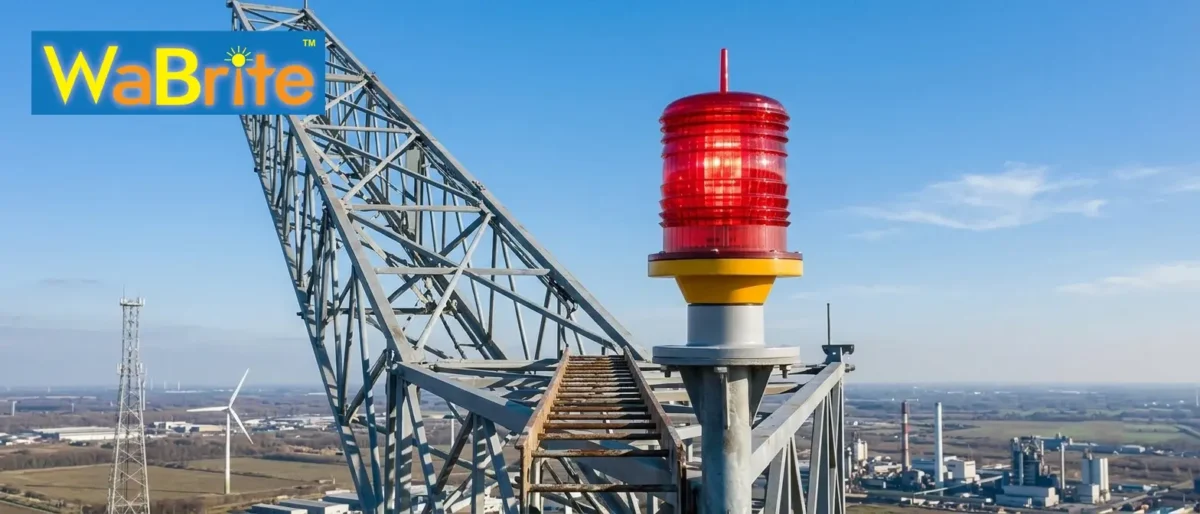
Selecting the right aviation obstruction light is more than just a procurement task; it is a critical investment in infrastructure safety and regulatory compliance. For industrial lighting dealers and project engineers, the challenge lies in balancing extreme durability with the stringent standards set by organizations like the FAA and ICAO. Whether you are illuminating a communication tower, an industrial chimney, or a large-scale renewable energy site, understanding the technology behind these beacons is essential.
In this guide, we explore how high-intensity LED systems, specifically those designed for demanding industrial environments, provide long-term reliability while minimizing operational costs.
Why Durability and Material Science Matter in Industrial Lighting
In high-altitude or harsh outdoor environments, an aviation obstruction light must withstand more than just the elements. Beyond standard waterproofing, these units face constant exposure to UV radiation, extreme temperature fluctuations (from -40°F / -40°C to +131°F / +55°C), and high-frequency vibrations.
Industry professionals know that the “total cost of ownership” is determined by maintenance frequency. Relying on inferior components often leads to premature failure, requiring dangerous and expensive manual repairs at heights of 150 feet (46m) or more. WaBrite engineering focuses on:
- Corrosion-Resistant Housing: Utilizing aerospace-grade alloys or UV-stabilized high-impact polycarbonates.
- Thermal Management: Advanced heat-sinking designs that extend LED lifespan beyond 50,000 hours.
- Surge Protection: Integrated circuits capable of handling lightning strikes and power grid instability.
By choosing equipment built for longevity, dealers can provide their clients with peace of mind, knowing the structure remains compliant and visible at all times.
Applications and Compliance: Navigating Global Standards
Industrial projects, ranging from industrial lighting installations to telecommunications infrastructure, must adhere to specific lighting patterns. A robust, aviation obstruction light must be versatile enough to meet both FAA (USA) and ICAO (International) requirements.
Key Usage Scenarios:
- Telecommunications & Broadcast Towers: These require consistent flashing or steady-burning red beacons to alert pilots of potential hazards at night.
- Industrial Stacks & Chimneys: Due to height, these structures often require synchronized multi-level lighting to ensure 360-degree visibility.
- Wind Farms & Utility Grids: High-intensity beacons serve as vital markers for low-flying aircraft in remote, often mountainous areas.
For professionals sourcing for these projects, ensuring the hardware is ETL-verified or CE-certified is non-negotiable. Our Aviation Obstruction Lights are engineered to bridge the gap between high performance and regulatory peace of mind.
Buy Now High-Intensity LED Aviation Obstruction Light – Industrial Red Warning Beacon
Frequently Asked Questions (FAQs)
Q1: How do I choose between medium and high-intensity aviation obstruction lights? A1: The choice depends on the height and purpose of the structure. Generally, structures below 200 feet (61m) require medium-intensity, while super high-rise buildings and tall chimneys exceeding 500 feet (153m) demand high-intensity systems.
Q2: What is the benefit of LED over traditional incandescent bulbs? A2: LED technology offers significant energy savings, reduced maintenance due to longer life cycles, and superior resistance to shock and vibration, which is critical for towers swaying in the wind.
Q3: How does WaBrite ensure synchronization across multiple beacon units? A3: WaBrite units often feature integrated GPS synchronization, ensuring all lights on a structure flash simultaneously, meeting global aviation safety standards without complex external controllers.
Q4: Can these lights withstand extreme weather conditions? A4: Yes, all our units are IP66 or IP67 rated, designed to operate reliably in harsh environments including heavy rain, snow, and extreme heat.
Q5: What support is available for bulk industrial procurement? A5: We offer dedicated technical support for distributors and project engineers, providing data sheets, compliance documentation, and optimized lighting layout plans for large-scale projects.